Antique vase in oriental style
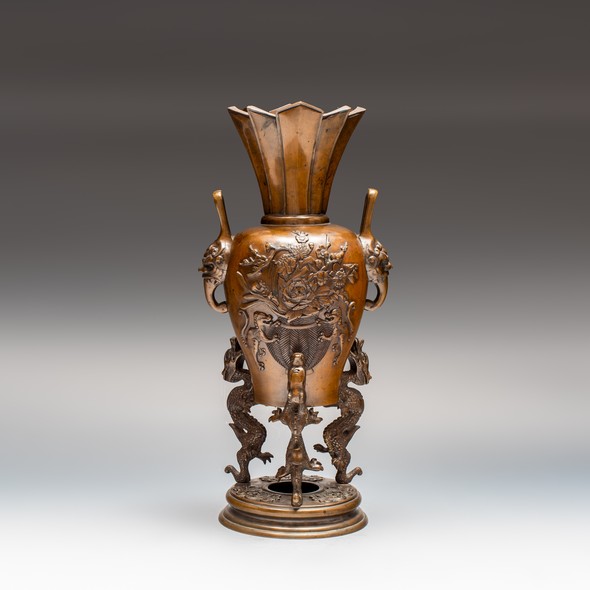
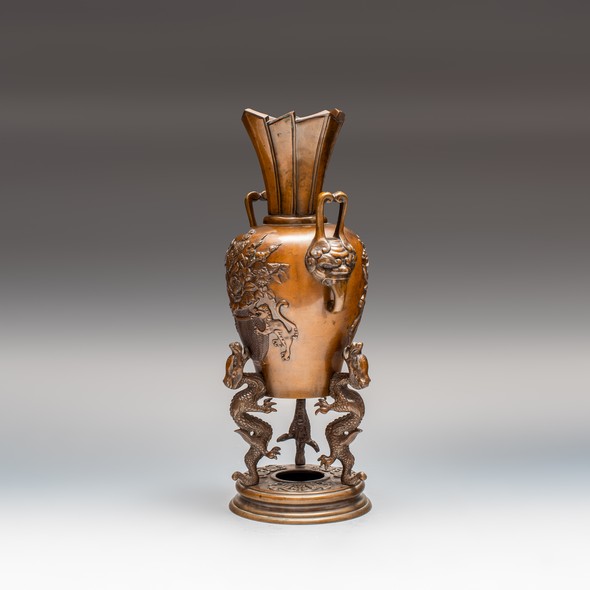
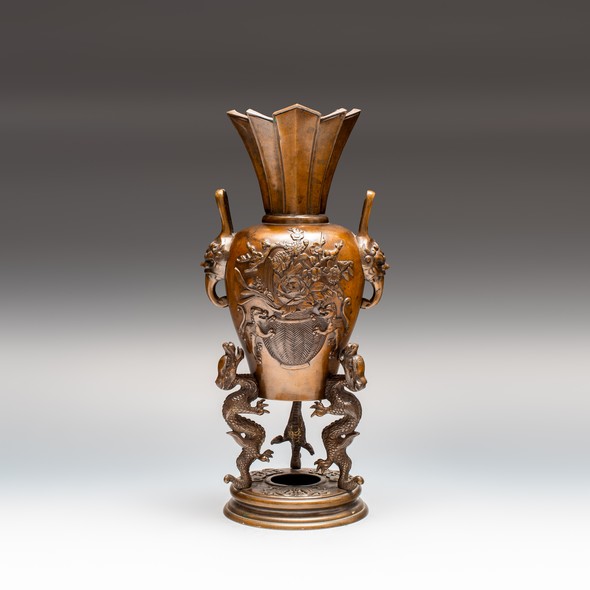


Vase "Dragons" . Master Muneyoshi (?, 宗喜) Japan, 1920-1930 (Meiji period (1868-1912), Taisho (1912-1926)) Bronze; casting, engraving, patination. A bronze vase with high legs in the form of dragons is an example of Japanese bronze sculpture of the first third of the twentieth century. On a round circular base with embossed ornamental motifs, three high legs in the shape of writhing dragons are mounted on the upper surface: resting their tails on the base, they support the body of the vessel with their breasts, paws with claws facing inward, scales are shown in fine relief on their bodies. , small strands of mane above the paws, flames coiling around the bodies of dragons. On the smooth surface of the body, two relief compositions of flowers in spherical wicker vases are placed on both sides between the curly handles, the vases on both sides are supported by lions. The handles of the vase are made in the form of demonic masks with tongues sticking out and high horns curled in volutes rising above the shoulders of the vessel. The expanding throat has a complex shape, as if folded from strips of paper or cloth. The uneven edge of the throat and its relief resemble the headdress of Buddhist priests of high ranks, often depicted on the heads of deities of various shapes. The base of the vase is engraved with the signature of the master and the author's graphic sign kao. The signature is made in a stylized archaic manner, it is difficult to read, but by close analogy it is possible to read Muneyoshi (宗喜). No data could be found on a craftsman with that name or a creative pseudonym, but general stylistic features make it possible to link the object submitted for examination with a group of products from the workshop of Kimura Tone (1781-1830), in whose work individual sculptures (okimonos) of writhing dragons with thin bodies and long muzzles, or vases complemented by figures of these dragons, appear for the first time. fantastic creatures. The successors of Kimura Tone's artistic style in the Meiji era brought eclectic features to the art of bronze sculpture, skillfully combining traditional Far Eastern forms and individual Western stylistic features.
Antique vase in oriental style

- Артикул
- 03_2038
- Available:
- In Stock
Shop at Novaya Riga (Unimoll)
- In section:
- furniture and décor in oriental style, vintage japanese vases, miscellaneous, decor, antique vases, other, gifts
- Materials:
- bronze
Обозначение размеров:
- H – высота,
- W – ширина,
- D – глубина,
- d – диаметр
- Style:
- Oriental
- Period:
- XXth century

в ДЗЕН.
Место, в котором собраны необычные предметы и истории.
Ещё в разделе «Furniture and décor in oriental style»
 Antique vases
Famille Rose
Ref nr. 03_1958
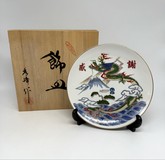 Vintage plate "Dragon"
Ref nr. 03_0130
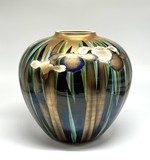 Vintage vase "Irises"
Kutani, Japan
Ref nr. 88_1212
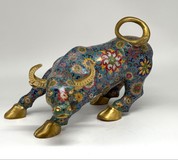 Antique sculptures "Attacking bull" cloisonne, China
Ref nr. 88_4430
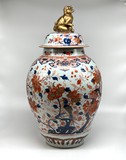 Antique vase
Ref nr. 88_2491
 Antique shelving
Ref nr. 02_2233
 Antique hibachi vase
Ref nr. 03_0351
 Antique vase
Ref nr. 88_3337