Antique vase Kutani, Japan
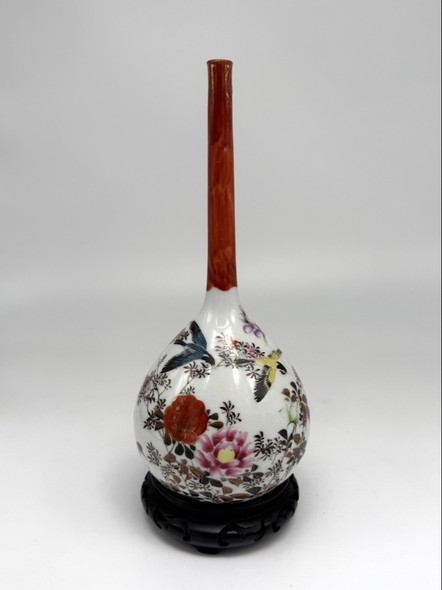
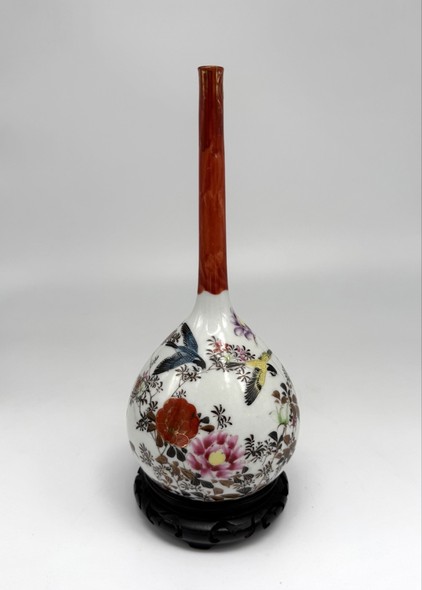
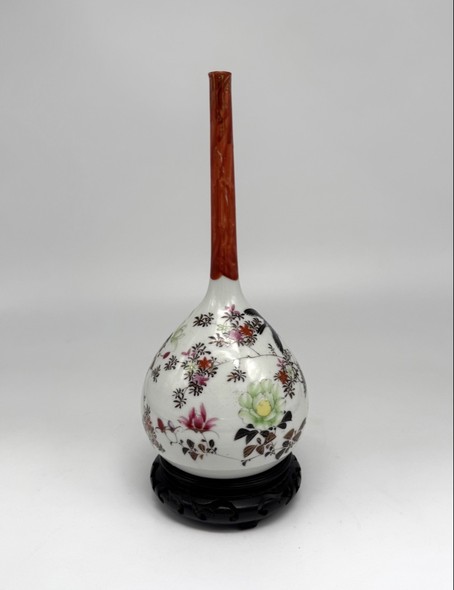
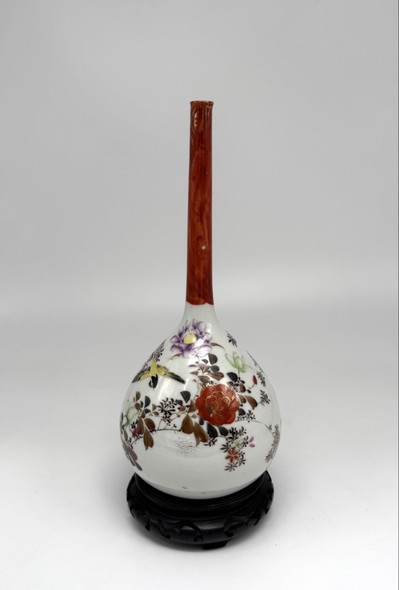
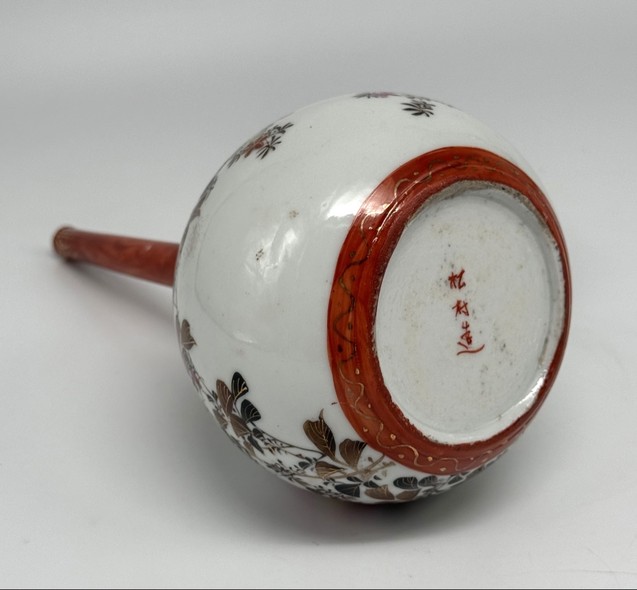


Antique Kutani vase. Porcelain, glaze. Japan, the twentieth century. Kutani, Kutani-yaki, is a style of Japanese porcelain that originated from the moment when Goto Saijiro, a member of the Maeda clan, installed a kiln in the village of Kutani (now part of the city of Kaga) on the orders of Maeda Toshiharu, the ruler of the Kaga region. The porcelain style is known for its multitude of colors — such as green, blue, yellow, purple, and red — and the bold patterns that cover most of the surface of each piece. Kutani-yaki products were first made in 1655 in the city of Kaga. The first kiln was installed in present-day Yamanaka Onsen Kutani city when high-quality pottery clay was discovered in the area. Then it was known as Kokutani, with bright color schemes, which are characterized by motifs of birds, flowers, mountains and water.[ Maeda Toshiharu ordered Goto Saijiro to go to Arita in Saga Prefecture to learn how to make porcelain. Maeda did this to increase his political and personal fortune. Recently, a theory has been put forward that most or all of the Kokutani tableware was actually created in Arita, and not just influenced by local ceramics. Kokutani enjoyed popularity for the next few decades, until Kutani abruptly closed in 1730. The reasons for this closure are being discussed. There were theories that it was difficult to find the pigments needed for glazing, or that there were financial difficulties. This period of production is now called Old Kutani (古九谷 Kokutani). In 1810, about 80 years later, Kutaniyaki was restored with the help of several "Kamamoto" or potters. During the development of Kutaniyaki, new techniques of overglaze painting developed by various Kamamoto were used. The new form of kutaniyaki is dominated by 6 different glaze techniques: the Mokubei style, which was influenced by Chinese ink painting techniques. Green, yellow, purple and dark blue colors form the basis of the Yoshidaya style. The contrast of Yoshidai is the Eiraku style with its simplified application of a gold coating on the first layer of red. The Iidaya or hatirode style differs from the traditional kutani style, dedicated to nature, with small drawings of human figures on a red and gold background. Shoza style is a combination of all four techniques of overglaze treatment. The monument to Goto Saijiro was erected next to the old kiln for firing Kutani dishes in the city of Kaga. In 1975, the style of making kutani was called a traditional craft. Currently, there are several hundred companies producing products from Cutani.
Antique vase Kutani, Japan

- Артикул
- 03_1957
- Available:
- In Stock
Shop at Novaya Riga (Unimoll)
- In section:
- furniture and décor in oriental style, vintage japanese vases, decor items, miscellaneous, decor, antique vases, other, gifts, for leaders, for men, vip gifts, for women
Обозначение размеров:
- H – высота,
- W – ширина,
- D – глубина,
- d – диаметр
- Style:
- Oriental
- Period:
- XXth century

в ДЗЕН.
Место, в котором собраны необычные предметы и истории.
Ещё в разделе «Furniture and décor in oriental style»
 Antique panel "Monkeys"
Ref nr. 02_2104
 Antique
 Ref nr. 88_2480
 Antique sculpture "Pho the Dog"
Ref nr. 88_0747
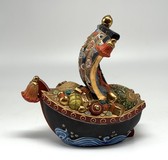 "Takarabune" Vintage Sculpture
Ref nr. 03_0143
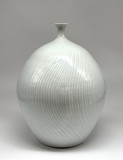 Antique vase by Fujii Shumei
Ref nr. 88_3708
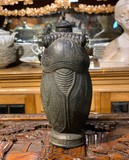 Antique vessel in the shape of a cicada
Ref nr. 88_2233
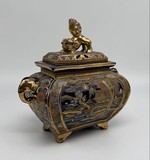 Antique
 Ref nr. 03_0928
 Antique okimono "Kinjiro"
Ref nr. 88_1501