Vintage embroidery on silk with hand‑stitching, Japan
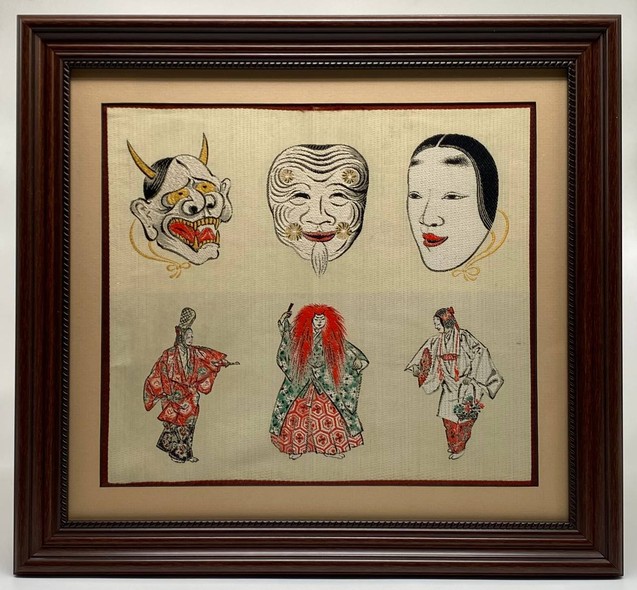
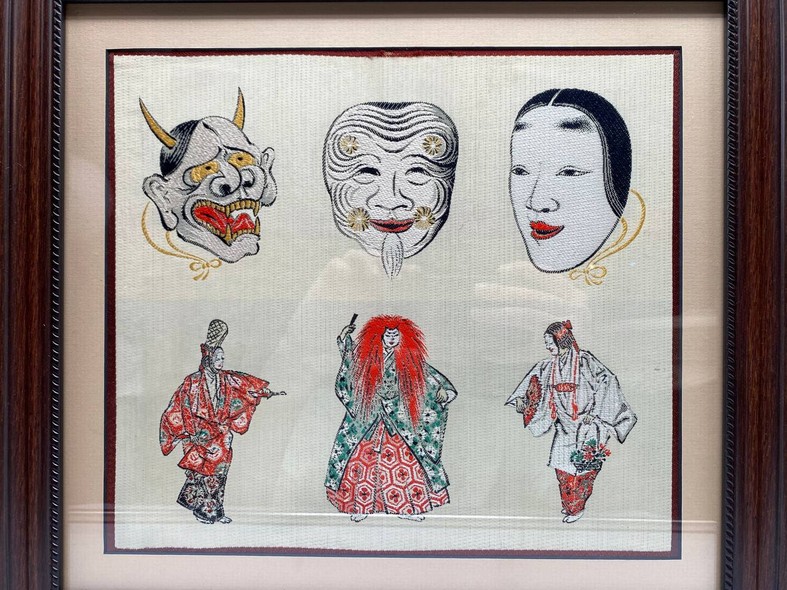
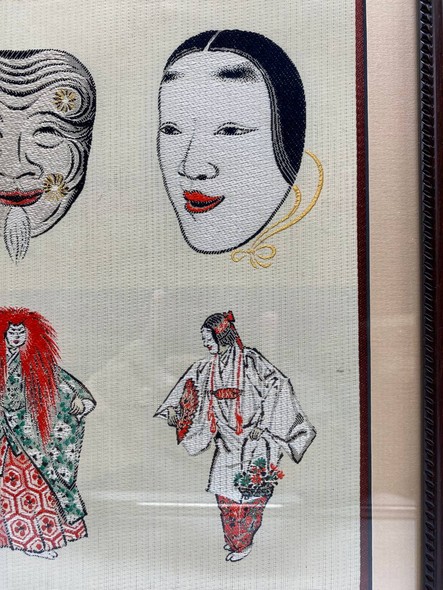
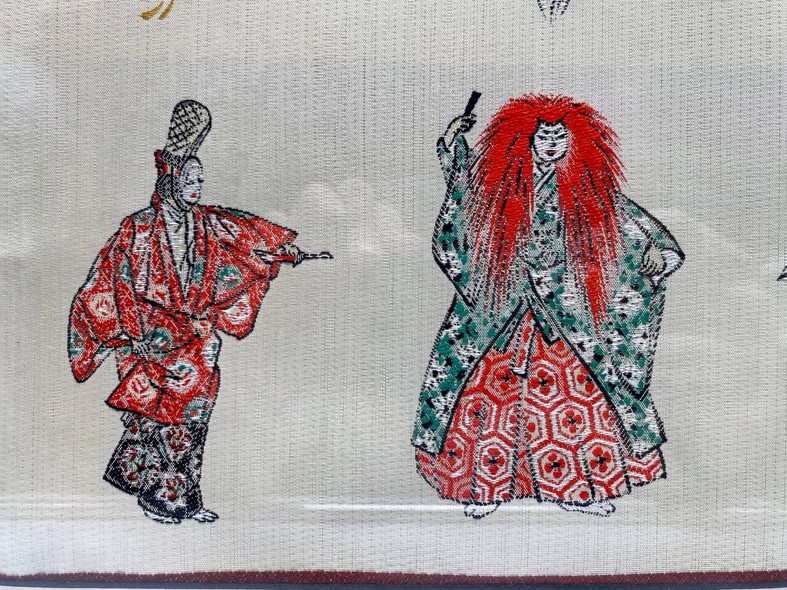
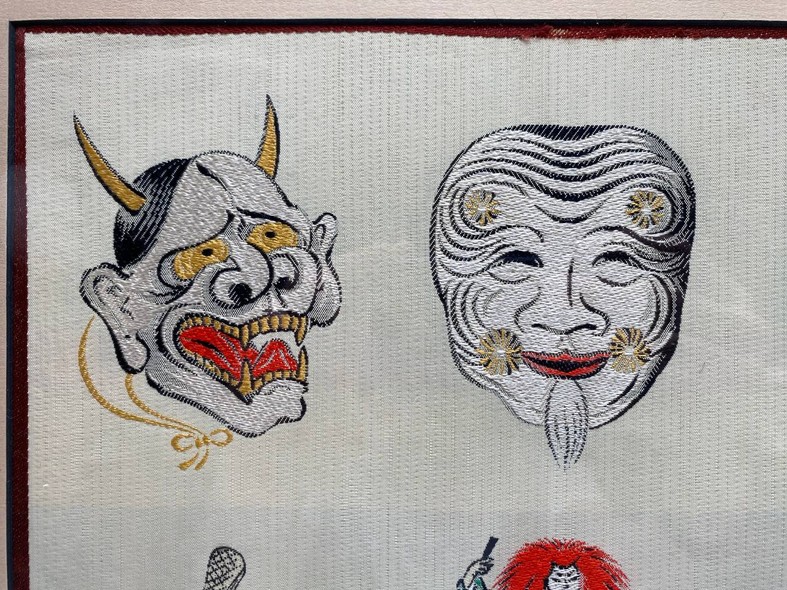


A vintage silk embroidery painting with a depiction of masks worn by actors of the Noh theatre. Japan, 20th century. The canvases are framed with matting. The painting is a decorative silk fabric with embroidered silk threads. Embroidery with a plain stitch, as a type of art, has a very ancient origin; masters embroider using the “drawing stitch,” and their work is highly valued and captivating. There are several types of embroidery, such as sashiko, plain stitch, kanzashi, bunka, and temari. Sashiko embroidery originated in the 18th century; ordinary people were not allowed to wear clothes made of brightly colored fabrics, so people began to decorate their clothes with embroidery and scraps. Poor people could not afford new clothes and simply restored them using embroidery, which eventually evolved into an art form. In China, Suzhou embroidery, which is done with the finest needles on silk, is over two thousand years old. Even the already fine silk threads are sometimes divided into even finer strands to achieve the maximum effect of the delicacy of the work. Sometimes creating such a silk painting takes up to several years. The color palette can also be extensive to create a realistic effect. The threads are dyed by hand. This canvas is embroidered with silk threads depicting actors and masks of the Noh theater. The theater originated in the last quarter of the 14th century, where actors perform wearing masks and embody the military‑feudal aesthetic ideals of the samurai class. The masks used in Noh theater are a very important part of the performance. The masks are often made of cedar, covered with plaster, and painted. There are quite a few types of masks. They all differ in purpose and the actor’s role. The theater also actively uses the symbolism of the fan.
Vintage embroidery on silk with hand‑stitching, Japan

- Артикул
- 88_1235
- Available:
- In Stock
Shop at Novaya Riga (Unimoll)
- In section:
- furniture and décor in oriental style, decor items, miscellaneous, other, gifts, for leaders, for men, vip gifts, for women
- Materials:
- silk
Обозначение размеров:
- H – высота,
- W – ширина,
- D – глубина,
- d – диаметр
- Style:
- Oriental
- Period:
- XXth century

в ДЗЕН.
Место, в котором собраны необычные предметы и истории.
Ещё в разделе «Furniture and décor in oriental style»
 Antique set of four tables
Ref nr. 02_5135
"Horses", Japan
Ref nr. 88_7776
 Vintage vase "Herons, peacocks and 4 nobles", China
Ref nr. 88_5757
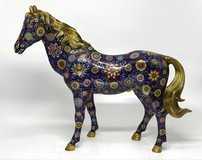 Sculpture "Horse", cloisonné
Ref nr. 88_4432
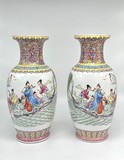 Antique pair vases
Ref nr. 02_5655
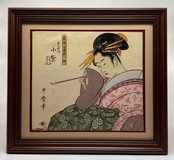 Vintage silk panel “Geisha”, Japan
Ref nr. 88_1237
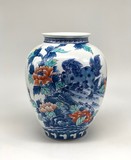 Antique Japanese
 Ref nr. 88_3450
 Antique Fragrance Box
 Kutani
Ref nr. 88_3415