Antique vase "Emperor", Satsuma
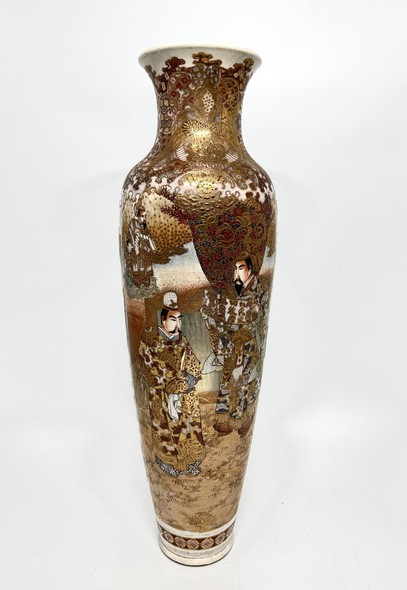
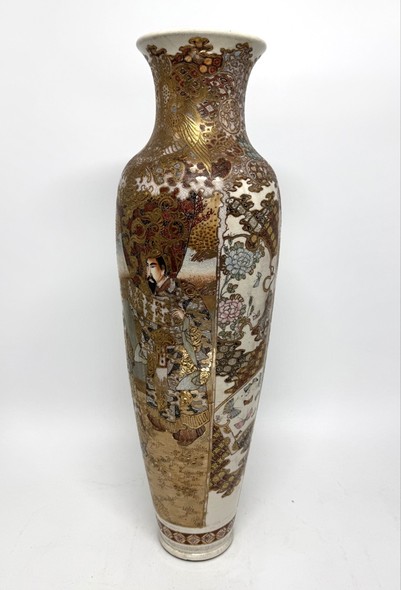
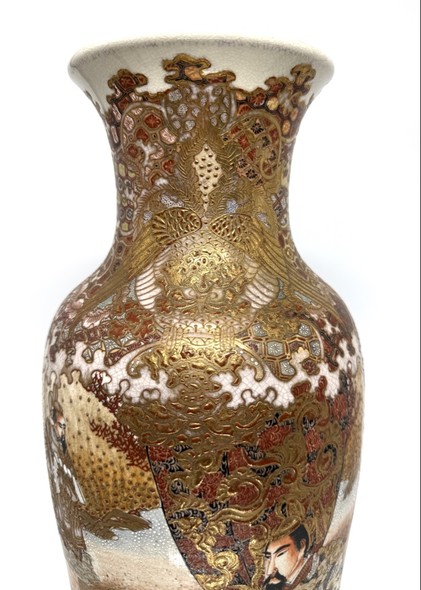
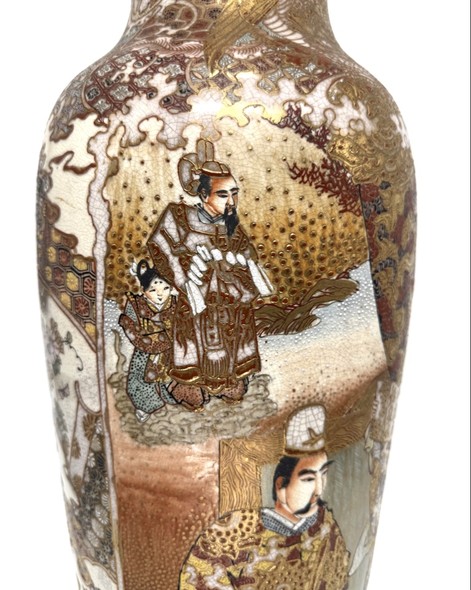
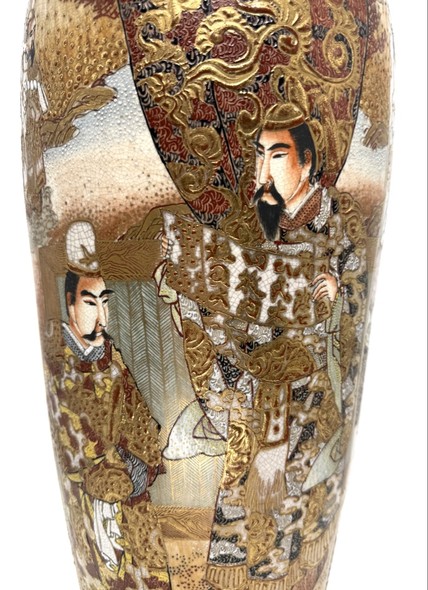


An antique vase, "The Emperor." Crafted from ceramic, it is decorated with polychrome enamels and gold suikin. The surface is decorated with overglaze painting and gilding, combined with tinted unglazed areas, a technique known as nishikide. The painting is masterfully executed, combining classical genre painting and painting with the decorative techniques of relief gilding (moriage). The body depicts the emperor with a Japanese kuge aristocrat against a rich backdrop. The borders of the central design and the background of the vase are meticulously crafted using subtle geometric patterns and abstract details in a rich Kyoto color palette, creating a visual structure between the narrative scenes. The narrative is harmoniously integrated into traditional Japanese ornamentation. Japan, Meiji era, late 19th – early 20th centuries.
The Meiji era marked Japan's transformation into a modern state and the beginning of a golden age of decorative arts. With the end of samurai rule and the opening of Japan to the West, artisans created works of exceptional quality for both domestic and international markets. Thanks to government support, including participation in world exhibitions and imperial commissions, Japanese lacquerware, cloisonné enamel, satsuma pottery, bronzes, and ivory carvings found their way to collectors worldwide.
Antique vase "Emperor", Satsuma

- Артикул
- 03_1992
- Available:
- In Stock
Shop at Novaya Riga (Unimoll)
- In section:
- furniture and décor in oriental style, vintage japanese vases, miscellaneous, decor, antique vases, other, gifts, for leaders, for men, for women
- Materials:
- porcelain
Обозначение размеров:
- H – высота,
- W – ширина,
- D – глубина,
- d – диаметр
- Style:
- Oriental
- Period:
- XXth century

в ДЗЕН.
Место, в котором собраны необычные предметы и истории.
Ещё в разделе «Furniture and décor in oriental style»
 Vintage aquarium planter
Ref nr. 88_3457
 Antique sculpture "Daikoku"
Ref nr. 02_0409
 Antique sculpture "Hotei"
Ref nr. 02_5298
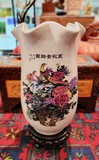 Unusual vase
Ref nr. 88_1061
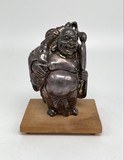 Vintage sculpture
Hotey
Ref nr. 88_5885
Ref nr. 02_5430
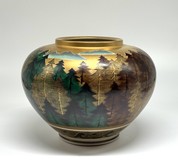 Vintage vase, Kutani,
"Forest and Mountains"
Ref nr. 88_1211
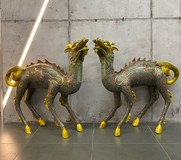 Vintage sculptures "Qilin"
Ref nr. 02_5582