Antique pair of I mari-style vases
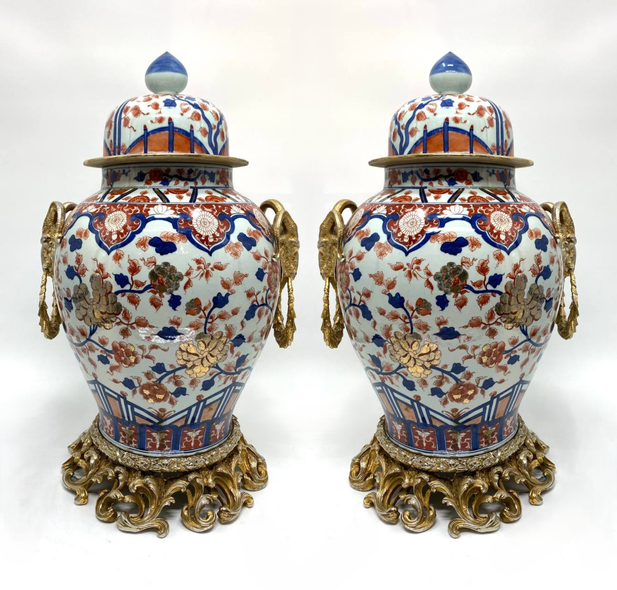
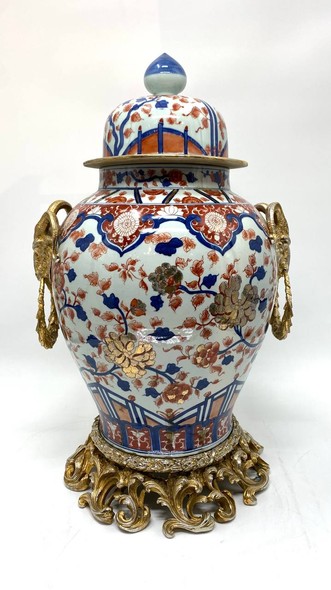
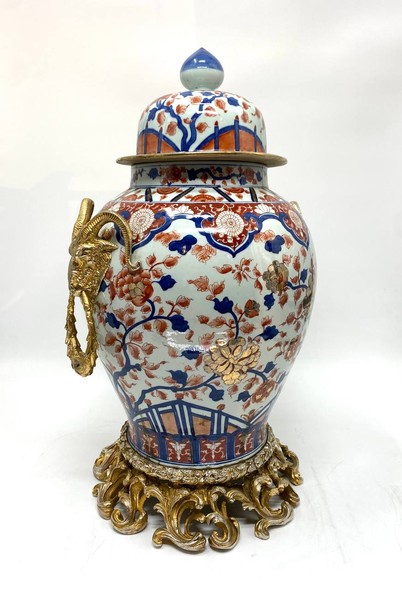
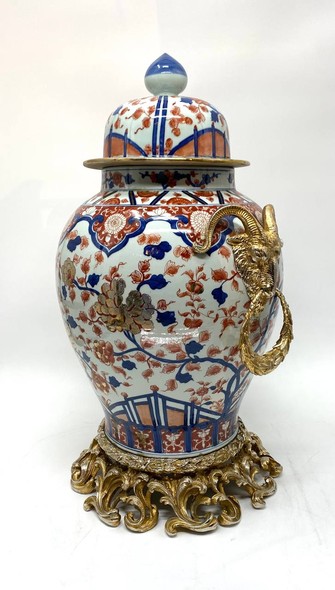
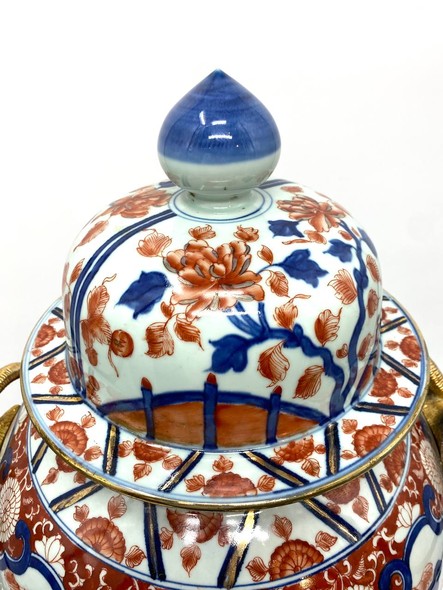
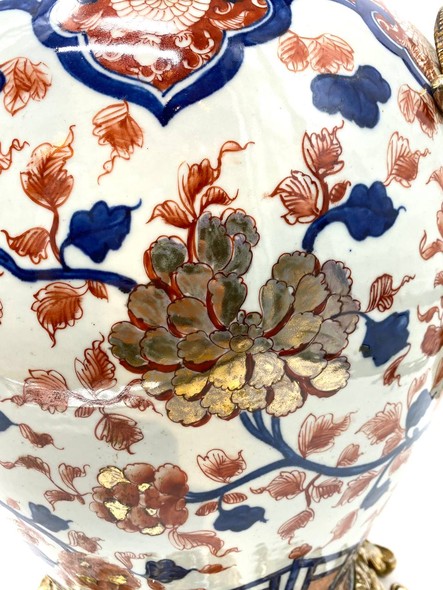
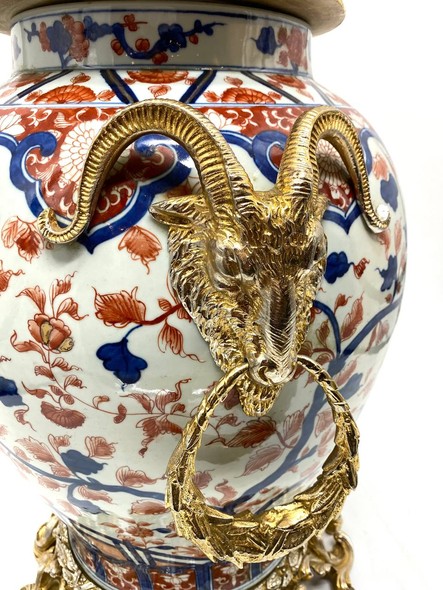
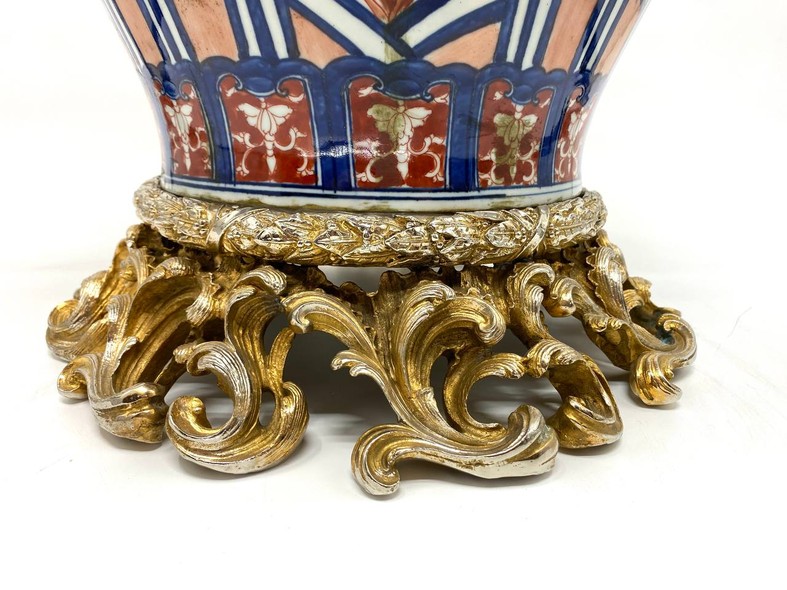


Antique paired vases in the Imari style. They are made of porcelain and decorated with bronze inserts with gilding. The vases themselves are made in traditional Japanese polychrome Imari painting. Both vases still have their original tops. The side handles are made in the form of the heads of rams or rams, and the gilded bronze legs refer to the European tradition. Imari is a generalized name for porcelain, which has been produced since 1616 in the Japanese village of Arita for export. The name "imari" was given to the products thanks to the port of Imabari, from which they were shipped to Western Europe. Initially, Japanese craftsmen imitated the Chinese style, but gradually the Japanese style developed, and porcelain products acquired new distinctive features. The craftsmen worked for generations, creating works of art that had a significant impact on such European factories as Meissen, Worcester, Dutch Delft porcelain, etc.
Antique pair of I mari-style vases

- Артикул
- 03_2047
- Available:
- In Stock
Shop at Novaya Riga (Unimoll)
- In section:
- furniture and décor in oriental style, vintage japanese vases, dishes, specials, miscellaneous, decor, antique vases, gifts, for leaders, for men, vip gifts, for women
Обозначение размеров:
- H – высота,
- W – ширина,
- D – глубина,
- d – диаметр
- Style:
- Oriental
- Period:
- XXth century

в ДЗЕН.
Место, в котором собраны необычные предметы и истории.
Ещё в разделе «Furniture and décor in oriental style»
 Vintage vase
Ref nr. 03_1016
Ref nr. 02_5430
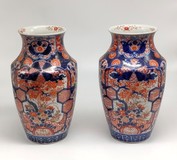 Antique
 Ref nr. 03_0055
 Vintage sculpture "
Ref nr. 88_1452
 Antique sculpture "Hotey with Goombay", Satsuma
Ref nr. 02_1816
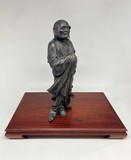 Antique sculpture "Daruma"
Ref nr. 02_5165
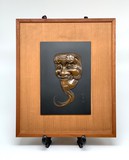 Vintage panel “Noh Theater Actor”
Ref nr. 02_5600
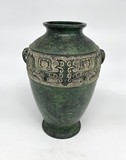 Antique oriental bronze vase
Ref nr. 02_5206